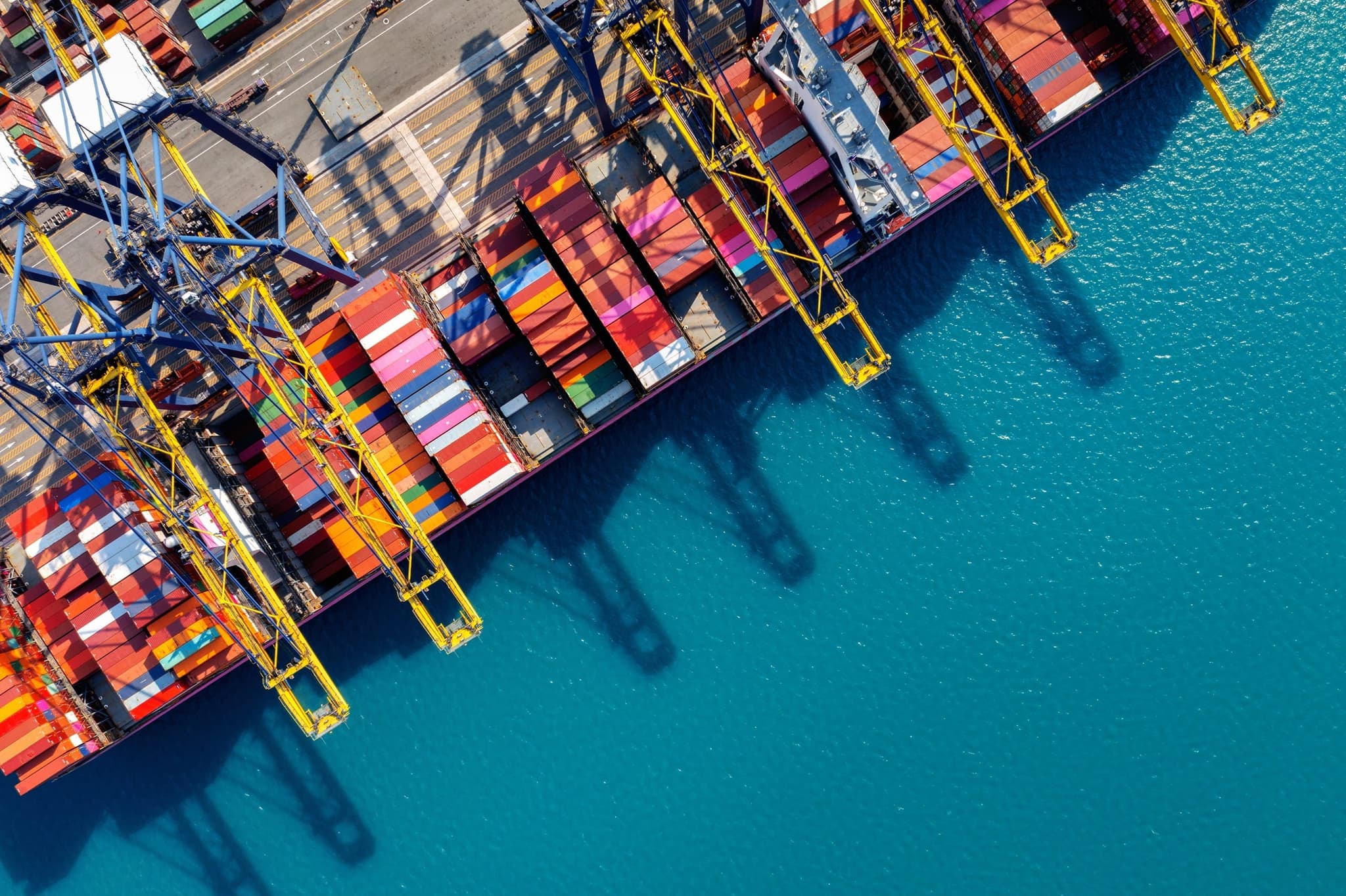
Foreign manufacturers setting up an Importer of Record (IOR) arrangement in Japan usually ask about customs clearance timelines, duty rates, and consumption tax recovery first. Insurance comes up later, often only after a shipment is delayed at the port or damaged in transit, at which point the question of who is covering the loss becomes urgent. Marine cargo insurance for the transit leg is typically arranged by whichever party bears the risk of loss under the agreed Incoterm. An IOR engagement does not include it unless it is explicitly arranged and priced in, and the customs-hold interval between arrival and release needs its own answer in the service agreement. Who covers the loss is a distinct question from product liability (who is responsible if the finished product injures someone after sale) and from customs bond or duty guarantees (who fronts the government's money). It is about the physical goods themselves, between the moment they leave the overseas factory and the moment the Japan buyer takes delivery, and it is worth understanding before a shipment moves.
Three Separate Risks, Not One#
An IOR shipment carries three distinct exposures that get conflated in casual conversation but need separate answers:
(a) Marine and transit cargo risk is physical loss or damage to the goods while in transit, from the overseas factory to the Japan port and on to final delivery.
(b) Bailee liability during customs hold is the exposure while the goods are physically in Aplash's custody as the named importer, between arrival and clearance, if something happens to them while they are held in a bonded area or warehouse awaiting release.
(c) Product liability post-sale is the exposure once the goods have been delivered and are in use, covered separately (see the dedicated product liability post referenced below). This is a different risk with a different insurance product and is not addressed further here.
This post covers (a) and (b), the physical-goods risk during the import movement itself.
Who Actually Carries Marine Cargo Insurance#
Under the standard IOR buy-and-sell structure, Aplash takes title to the goods before filing the import declaration and re-sells to the Japan buyer after clearance. Marine cargo insurance covering the transit leg is typically arranged and paid for by whichever party bears the commercial risk of loss during that leg under the agreed Incoterms, and this is negotiated per engagement, with no automatic default to the IOR provider. A shipment on CIF terms usually carries insurance arranged by the seller through the point of destination; a shipment on FOB or EXW terms typically requires the buyer side, meaning Aplash as IOR or the Japan buyer directly, to arrange coverage for the international leg. Confirming which Incoterm governs the shipment is the first step, because it determines who already has coverage in place and who has a gap to fill.
The mistake to avoid is assuming that appointing an IOR provider automatically means the goods are insured in transit. IOR is a customs and importer-of-record structure. It does not, by itself, include marine cargo insurance unless that coverage is explicitly arranged and priced as part of the engagement. A manufacturer shipping high-value equipment (industrial machinery, medical devices, semiconductor tooling) should confirm coverage exists and ask who holds the policy before the goods leave the factory.
Bailee Liability While Goods Sit in Customs Custody#
Between arrival at the Japan port and release from customs, goods are sometimes held in a bonded warehouse or holding area for longer than expected, particularly if a classification question, a missing document, or a compliance review (as with the pressure-vessel and dangerous-goods categories covered elsewhere on this blog) extends the clearance timeline. During this window, the goods are in the physical custody of the IOR provider or its logistics partner as bailee, and the question of who bears risk of loss or damage during that hold period is a separate coverage question from marine transit insurance, which is often deemed to end at arrival or at customs release depending on the policy wording.
A shipment with an extended customs hold, whether from a classification dispute, an incomplete document set, or a regulatory review, can fall into a coverage gap if the marine policy has already terminated on arrival and no separate bailee or warehouse coverage picks up the interval before release. This is a narrow but real exposure window, and it is worth confirming explicitly in the IOR service agreement.
What to Confirm Before the First Shipment#
(a) Which Incoterm governs the shipment, and therefore who is contractually responsible for arranging transit insurance.
(b) Whether the IOR provider's engagement includes arranging or confirming marine cargo cover, or whether the client or the overseas seller holds that responsibility.
(c) Whether coverage extends through the customs-hold interval or terminates at arrival, leaving a gap during an extended clearance.
(d) The insured value basis (CIF value, replacement cost, or another basis), since underinsuring high-value equipment against only its invoice value can leave a shortfall if a total loss occurs mid-transit.
This article is informational only and does not constitute legal, tax, or regulatory advice. Consult a qualified advisor before acting on the content. Last updated: 2026-07.