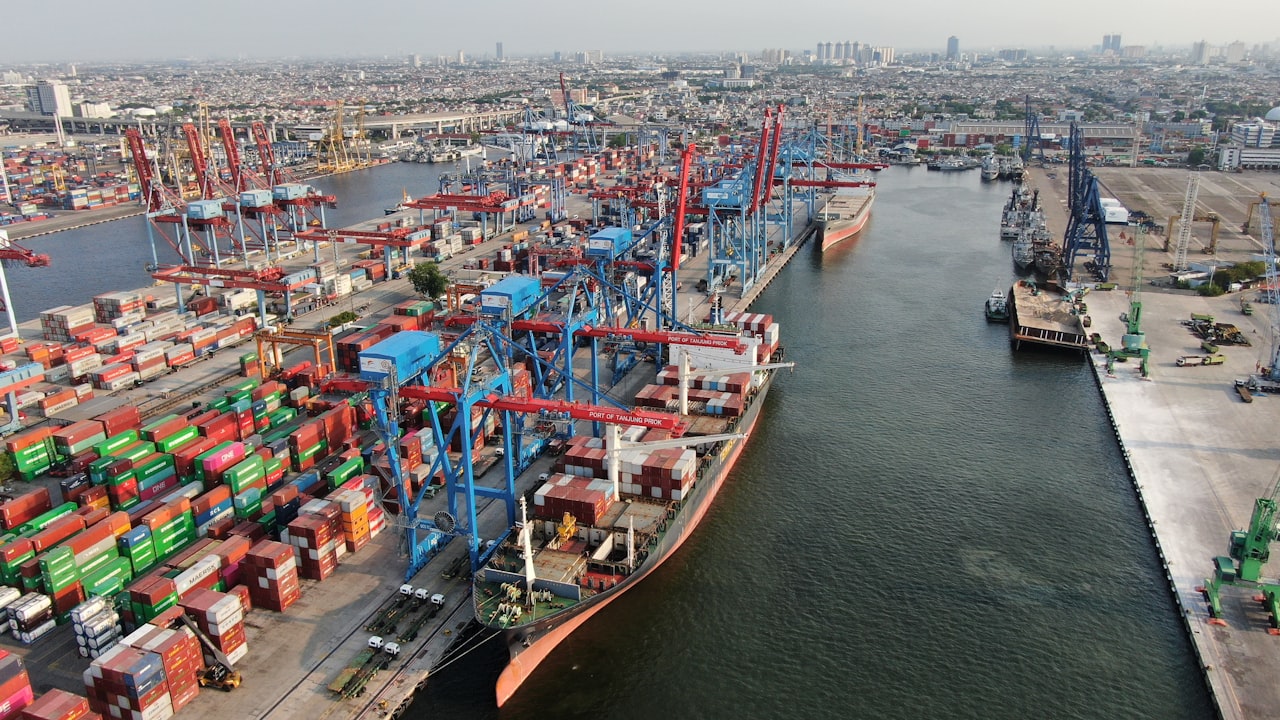
Japan's bonded customs framework (保税制度) is one of the most commercially significant mechanisms available to foreign importers operating in or through Japan, yet it remains poorly understood outside specialist circles. The framework allows goods to enter Japan physically while remaining outside Japan's customs territory for duty and tax purposes. As long as goods stay within a licensed bonded area (保税地域), no customs duty and no consumption tax / JCT (消費税) is assessed. When goods eventually move from bonded status into Japanese commerce, duty and JCT are calculated and paid at that point. If goods leave Japan by re-export instead, no Japanese duty or JCT is ever paid at all.
For importers managing regional distribution, export-oriented manufacturing, high-value inventory, or transit trade through Japan, this is not a procedural curiosity. It is a cash-flow and cost-structure tool. This guide covers the legal framework, the five bonded area categories, the economic logic for using or not using bonded operations, the licensing requirements, and the practical use cases most relevant to foreign companies importing into or through Japan.
The Legal Framework: 関税法 and the Bonded Concept#
Japan's bonded framework operates under Customs Act (関税法). The core concept is straightforward: Japan Customs designates or licenses specific physical locations as bonded areas. Goods stored within those locations are treated as not yet imported into Japan's commerce for the purpose of customs duty and JCT assessment.
This is the key structural distinction from a standard import. When goods arrive at a Japanese port and are cleared through a standard import declaration (輸入申告), duty and JCT are assessed and payable at that moment. When goods instead enter a bonded area, no import declaration for release into commerce is filed. The goods are physically present in Japan, but legally they sit outside Japan's fiscal and customs territory. The import declaration, and with it the duty and JCT obligation, is deferred until the goods move from bonded into domestic commerce.
The duty rate applicable when goods eventually leave bonded status is the rate in effect at the date of the outbound import declaration, calculated on the CIF value at that date. Duty rates are determined under Tariff Law (関税定率法). This means bonded storage does not lock in a historical rate; it defers the assessment to the exit date.
One further point on the fiscal treatment: bonded operations do not defer or substitute for non-tariff regulatory compliance. If an imported product requires PSE certification, PMD Act registration, or food sanitation clearance, those obligations are independent of bonded status and must be met before the product can be distributed in Japan. Bonded defers duty and JCT only.
The Five Categories of 保税地域#
Japan's bonded framework defines five distinct types of bonded area (保税地域). They differ in who operates them, how long goods can remain, what activities are permitted, and what licensing is required.
| Category | Japanese Name | Operator | Typical Use | Maximum Storage |
|---|---|---|---|---|
| (a) Designated Bonded Area | 指定保税地域 | Public authority | Port / airport short-term staging | 1-3 months (general) |
| (b) Bonded Warehouse | 保税蔵置場 | Licensed private entity | Long-term storage, distribution | Up to 2 years (extendable) |
| (c) Bonded Factory | 保税工場 | Licensed private entity | Processing and manufacturing | Duration of production cycle |
| (d) Bonded Exhibition Area | 保税展示場 | Licensed entity | Trade shows and exhibitions | Exhibition period |
| (e) Comprehensive Bonded Area | 総合保税地域 | Area operator (port/airport authority) | Multi-function logistics hub | Determined by area terms |
(a) Designated Bonded Area (指定保税地域)
designated bonded area (指定保税地域) are government-designated public areas located at ports and airports. They serve as the primary staging zone where goods physically land in Japan before customs clearance procedures are completed. Any importer may use them without a separate license, as access is provided through the port or airport operator.
The practical role is short-term: goods arrive, customs examination takes place, and within the applicable storage window (generally one to three months, subject to Japan Customs discretion) the importer either files an import declaration for release into commerce or moves the goods to a licensed bonded facility for longer-term storage. 指定保税地域 are not designed for distribution center operations or extended inventory holding.
(b) Bonded Warehouse (保税蔵置場)
bonded warehouse (保税蔵置場) is the most commercially relevant bonded category for importers operating distribution or e-commerce operations in Japan. These are privately operated warehouse facilities licensed by Japan Customs. They can hold goods for up to two years, with extension available on application to Japan Customs.
The bonded warehouse is the correct tool for:
- Regional distribution centers holding inventory for both Japan sales and re-export to other Asian markets
- E-commerce 3PL operations where goods are sold progressively to Japan customers, and duty plus JCT should align with actual sales rather than bulk inventory arrival
- High-value inventory where duty deferral until sale materially improves working capital
- Seasonal or uncertain-demand goods where the final disposition between Japan sales and re-export is not known at the time of arrival
The operator of a 保税蔵置場 holds the customs license. Goods owners using the facility are separate parties and need not hold their own license. However, the goods owner is responsible for proper declaration when goods exit bonded status.
(c) Bonded Factory (保税工場)
bonded factory (保税工場) is a licensed manufacturing facility where imported materials and components can be processed without paying duty on the inputs. Duty under Customs Act (関税法) and Tariff Law (関税定率法) attaches only when finished goods leave the bonded factory and enter Japanese commerce. If finished goods are re-exported rather than sold in Japan, no Japanese duty is ever assessed on the imported inputs.
This structure is standard for export-oriented manufacturing. Semiconductor fabrication operations, automotive component plants processing imported parts for re-export, and precision equipment manufacturers sourcing foreign inputs for finished-goods export all use bonded factory structures as a matter of course.
The licensing requirements for 保税工場 are more stringent than for 保税蔵置場. A production plan, detailed input-output ratio documentation, and integration with Japan Customs' supervisory systems are required. Application timelines are typically nine to twelve months.
(d) Bonded Exhibition Area (保税展示場)
bonded exhibition area (保税展示場) is a temporary licensed area for trade shows, exhibitions, and product launch events where imported goods are displayed without payment of Japanese duty. The bonded status is tied to the exhibition period: when the event ends, goods either leave Japan by re-export (no duty paid) or are declared for release into Japanese commerce at that point (duty and JCT assessed).
This structure is appropriate for importers bringing product samples, demonstration equipment, or prototype goods into Japan for trade show purposes. It is distinct from the ATA Carnet mechanism discussed below, though both serve exhibition-related use cases.
(e) Comprehensive Bonded Area (総合保税地域)
comprehensive bonded area (総合保税地域) is a large-scale licensed area that combines storage, processing, exhibition, and other bonded functions within a single customs-defined zone. These are typically operated at the port authority or airport authority level, with individual companies using the zone under the area operator's license framework rather than obtaining their own.
Comprehensive bonded areas exist at major port complexes and in certain special economic zone structures. Individual importers using a 総合保税地域 operate under the zone operator's license and customs supervision regime rather than applying for their own bonded designation.
How Duty Deferral Works Operationally#
Understanding the documentation flow is necessary for evaluating whether bonded operations are operationally viable for a given business model.
Entry into bonded status: When goods arrive at a 保税地域, an entry notification (搬入届) is filed with Japan Customs. This records the goods as having entered bonded storage. No import duty or JCT is assessed at this stage.
Storage period: Goods remain in bonded status under customs supervision. The bonded operator maintains inventory records accessible to Japan Customs. Storage limits vary by bonded category (two years for 保税蔵置場 at standard; longer on extension; production cycle duration for 保税工場).
Exit to Japanese commerce: When goods leave bonded status for sale or use in Japan, a exit declaration (搬出申告) triggers the standard import declaration process. Duty under Tariff Law (関税定率法) is assessed on the CIF value at the declaration date, using the applicable tariff rate in effect at that date. JCT is assessed simultaneously.
Exit by re-export: When goods leave bonded for export to a foreign destination, an export declaration is filed instead of an import declaration. No Japanese duty or JCT applies. The goods depart Japan without having ever entered Japanese commerce.
Bonded transit: bonded transit (保税運送) is the mechanism for moving goods between two bonded points within Japan under customs supervision. If goods arrive at Tokyo port but the destination bonded warehouse is in Osaka, a bonded transit authorization allows the goods to move between the two points while remaining outside Japan's customs territory. The transit route and conveyance must be authorized by Japan Customs.
When Bonded Operations Save Money: The Economic Cases#
Bonded status is not appropriate for all import flows. Four scenarios where the economics are clearly favorable:
(a) Re-export trade. Goods entering Japan for regional distribution, transit, or processing followed by export. Bonded operations eliminate Japanese duty and JCT entirely on the portion of goods that leave Japan rather than entering Japanese commerce. For a distributor moving goods through Japan to multiple Asian markets, only the portion actually sold in Japan incurs Japanese duty.
(b) Long-term inventory holding with deferred Japan sales. High-value goods held in a bonded warehouse for progressive sale into Japan over months. Duty and JCT are paid on each shipment that leaves bonded for a Japan customer, not on the full inventory at arrival. The working capital improvement is most significant for goods with high duty rates and long inventory cycles.
(c) Export-oriented manufacturing. Imported inputs processed in a bonded factory (保税工場) and re-exported as finished goods. The duty that would otherwise apply to the inputs is eliminated entirely for the re-exported portion. This is the standard structure for competitive export manufacturing where input costs determine margin.
(d) Variable disposition inventory. Goods arriving in Japan with uncertain final disposition between Japan sales and re-export. Bonded status preserves the option. The commercial decision about where each unit goes can be made after the goods are in Japan, without the duty cost locking in at arrival.
When Bonded Operations Do Not Save Money#
Bonded structures carry their own costs: facility fees charged by bonded warehouse operators, administrative overhead for customs documentation at each entry and exit, licensing costs for operators, and the compliance burden of customs supervision. These costs eliminate or reduce the benefit in certain scenarios.
(a) Goods subject to zero MFN duty. If the applicable Tariff Law (関税定率法) duty rate is zero, bonded operations provide no duty saving. The only remaining benefit is JCT deferral, which may not justify the facility and documentation costs for short-cycle inventory.
(b) Short-cycle inventory. Goods that move from Japan entry to Japan sale within days or weeks. The bonded facility cost and documentation overhead will typically exceed the interest cost of paying duty at arrival. Bonded operations are designed for weeks-to-months holding horizons, not rapid throughput.
(c) Goods that will definitively enter Japan commerce. If 100 percent of the goods will be sold in Japan and there is no re-export component, bonded operations provide cash-flow deferral but not cost elimination. Whether that deferral is worth the overhead depends on the duty rate, the holding period, and the company's cost of capital.
(d) Non-tariff regulatory compliance still required. Bonded status does not defer product compliance obligations. Electrical products requiring PSE certification under Japan's Product Safety Electrical Appliance and Material Law, medical devices requiring PMD Act registration, and food products subject to Japan's Food Sanitation Act must comply before distribution regardless of bonded status. If those compliance timelines are the binding constraint on Japan entry, bonded storage may provide useful holding time while compliance is completed, but it does not substitute for the compliance work itself.
Licensing Requirements#
The licensing requirements differ significantly across bonded categories. The table below covers the two categories most relevant to importers establishing their own bonded operations.
| Requirement | Bonded Warehouse (保税蔵置場) | Bonded Factory (保税工場) |
|---|---|---|
| Application to | Japan Customs (Regional Customs Office) | Japan Customs (Regional Customs Office) |
| Physical facility standards | Fencing, access control, surveillance, customs officer access | All of bonded warehouse requirements plus production-environment supervision |
| Financial soundness | Required | Required (higher threshold) |
| Documentation required | Facility layout, security plan, operator background | Facility layout, production plan, input-output ratio documentation, supervision integration plan |
| Typical application timeline | 6 months | 9-12 months |
| Record retention obligation | 7 years | 7 years |
| Customs audit exposure | Regular Japan Customs audits | Regular Japan Customs audits; production record scrutiny |
For 指定保税地域 and 保税展示場, the area operator (port authority, exhibition venue operator) holds the designation and individual importers use the facility rather than obtaining their own license. For 総合保税地域, individual companies similarly operate under the zone-level authorization.
Operational Compliance Requirements#
Licensed bonded operators carry ongoing compliance obligations that prospective operators should understand before committing to the structure.
Customs supervision and access. Japan Customs retains supervisory authority over bonded areas. Customs officers must be able to inspect goods and records on request. Operators cannot restrict access. This is not a practical obstacle for legitimate operations but it is a legal condition of the license.
Inventory visibility. Bonded operators are required to maintain real-time or near-real-time inventory records accessible to Japan Customs. NACCS (Nippon Automated Cargo and Port Consolidated System) integration is standard for major bonded operators. Importers using bonded facilities should confirm the operator's NACCS connectivity as part of facility due diligence.
Record retention. All bonded entry, storage, and exit records must be retained for seven years. This includes entry notifications (搬入届), exit declarations (搬出申告), and supporting commercial documents.
Physical security. Bonded operators must maintain physical security standards consistent with customs supervision requirements: perimeter fencing or equivalent, controlled access points, and surveillance coverage. These standards are assessed at licensing and checked at audit.
Bonded Status and Non-Tariff Regulatory Compliance#
One of the most common misunderstandings about bonded operations is the assumption that bonded status creates a compliance "holding pen" that also pauses product safety and other non-tariff obligations. It does not.
When goods exit bonded status and are declared for release into Japanese commerce, the import declaration triggers customs clearance. Japan Customs will check whether required certificates, licenses, or notifications are in place for goods subject to non-tariff regulatory requirements. Goods that require PSE electrical safety certification, Radio Act technical conformity (技適) certification, or food sanitation inspection certificates must have those in hand at the time of the import declaration for release into commerce.
The practical implication: bonded storage can usefully hold goods during the period while regulatory compliance work is being completed in parallel. An importer who has goods in Japan but whose PSE or PMD Act registration is still pending can hold the goods in a bonded warehouse without incurring duty during the wait. But the goods cannot be released from bonded for Japanese distribution until compliance is complete. For a longer discussion of PSE and PMD Act requirements, see the posts referenced at the bottom of this article.
Bonded Operations and the ATA Carnet#
Foreign importers sometimes encounter both bonded operations and the ATA Carnet as mechanisms for bringing goods into Japan without paying full duty. They are different tools with different use cases.
The ATA Carnet is an international instrument for temporary admission. Goods are formally cleared into Japan under the carnet, with duty suspended by a bond rather than deferred through the bonded area mechanism. The carnet is designed for goods accompanying business travelers: samples, demonstration equipment, professional tools, and exhibition items used for a specific event. ATA Carnet goods enter Japan's customs territory (they are cleared at entry) but duty payment is suspended conditionally on re-export.
Bonded area operations are a domestic Japan customs framework. Goods never formally enter Japan's customs territory for duty purposes until they exit the bonded area into commerce. They are not cleared at entry; the import declaration is deferred entirely.
The practical difference:
- ATA Carnet is appropriate for goods traveling with a person to a specific event, professional engagement, or sales demonstration, then returning abroad. The mechanism is operationally simple and internationally recognized.
- Bonded warehouse or bonded factory operations are appropriate for sustained commercial operations: distribution center inventory, regional logistics hubs, processing operations. They require licensed facilities and ongoing customs supervision.
For exhibition goods, either mechanism may apply depending on the commercial structure. bonded exhibition area (保税展示場) is the bonded-framework equivalent for trade show operations.
Bonded Operations and the Import Declaration: What Happens When Goods Leave Bonded#
When goods exit a 保税蔵置場 or 保税工場 for release into Japanese commerce, the standard import declaration process under Customs Act (関税法) applies. The HS classification for the goods must be determined correctly, as it governs both the applicable duty rate under Tariff Law (関税定率法) and any non-tariff regulatory triggers.
If EPA tariff preference is available under a Japan free trade agreement (such as RCEP or the Japan-EU EPA), that preference can be claimed at the exit declaration point. The origin documentation requirements for EPA preference apply at the time of the import declaration for release into commerce, not at the time of entry into bonded storage. For an overview of EPA preference mechanics, see the post on Japan EPA and FTA utilization referenced at the end of this article.
The HS code used in the NACCS import declaration at exit must be consistent with any FEFTA (外為法, Foreign Exchange and Foreign Trade Act) filings if the goods fall under controlled categories. For a discussion of HS classification mechanics, see the Japan HS Code Classification Guide referenced below.
Bonded Operations for Non-Resident Importers#
A non-resident company that does not have a Japan legal entity can access bonded warehouse operations, but the structure requires careful planning.
The bonded warehouse operator holds the customs license. A non-resident goods owner can store goods at a licensed 保税蔵置場 as the goods owner without holding a license itself. When goods exit bonded for Japanese commerce, the import declaration requires a Japan-resident importer of record.
For non-resident importers, two structural options apply at the exit declaration stage:
The first is an IOR structure, where Aplash acts as the legal importer on the import declaration, takes title to the goods, pays duty and JCT, and re-sells to the Japan buyer. The goods can have been held in a bonded warehouse in the non-resident's name prior to this point.
The second is an ACP (税関事務管理人, Attorney for Customs Procedures) structure, available under Customs Act (関税法) to non-resident importers who wish to appear as the legal importer on the declaration themselves. Under ACP, Aplash acts as the Japan-resident agent before Japan Customs while the non-resident company is named on the import declaration.
These are structurally distinct services. The choice depends on whether the non-resident company wishes to hold importer status on the declaration or prefers Aplash to hold it. For a full comparison, see the IOR vs. ACP guide referenced at the end of this article.
Practical Use Cases: Applying the Framework#
The following use cases illustrate where bonded operations create measurable commercial value.
E-commerce 3PL operation with bonded warehouse. A foreign brand sells directly to Japan consumers through an e-commerce platform. Goods arrive in Japan by airfreight and are held in a licensed bonded warehouse (保税蔵置場). Duty and JCT are assessed only on individual units as they ship to Japan customers. The full inventory shipment does not trigger a bulk duty and JCT payment at arrival. For high-duty-rate goods with months of inventory holding, the working capital difference is material. For an overview of e-commerce import structures, see the e-commerce IOR guide referenced below.
Regional distributor with Japan bonded hub. A distributor sells into Japan, South Korea, and Taiwan from a Japan-based inventory hub. Total inventory arrives at the Japan bonded warehouse. Japan-destined units exit bonded under a Japan import declaration; Korea-destined and Taiwan-destined units exit under export declarations. Japanese duty and JCT apply only to the Japan-sold portion. The distribution economics improve meaningfully compared to a structure that clears all inventory through standard Japan customs at arrival.
Bonded factory for export-oriented production. A manufacturer imports semiconductor inputs, precision materials, or electronic components into a bonded factory (保税工場). Finished products manufactured from those inputs are exported. Japanese duty on the imported inputs is eliminated for the exported production. This structure is industry-standard in Japan's semiconductor, automotive, and precision equipment sectors.
Pre-entry holding for regulatory compliance. An importer brings goods into Japan by sea but regulatory compliance (PSE certification, PMD Act registration) is still being completed. A bonded warehouse provides compliant storage while the compliance work proceeds. When certification is complete, the import declaration is filed at that point. This avoids both the cost of re-routing goods and the penalty exposure of attempting to clear goods without required certificates.
Trade show goods with bonded exhibition area. A foreign manufacturer sends demonstration units and product samples to a Japan trade show. Using a bonded exhibition area (保税展示場) designation for the exhibition venue allows the goods to be displayed and demonstrated without payment of Japanese duty. After the exhibition, goods that are not sold in Japan are re-exported with no duty cost. Goods that are sold or retained for further Japan use are declared for import at that point.
Key Questions for Evaluating Whether Bonded Operations Are Right for Your Business#
Before committing to a bonded warehouse structure or seeking a bonded factory license, the following questions determine whether the economics work.
(a) What is the applicable MFN duty rate for your goods? If the rate is zero or near-zero, the financial case for bonded storage rests entirely on JCT deferral, which may not justify the facility cost. Identify the HS classification and applicable rate first. See the Japan HS Code Classification Guide and Japan Customs Duty Guide for the rate determination framework.
(b) What percentage of goods will be re-exported rather than sold in Japan? The full benefit of bonded operations accrues on the re-exported portion. If re-export is a small fraction of the total, the cost-benefit may favor standard clearance at arrival.
(c) What is the inventory holding period? Bonded operations deliver their cash-flow benefit over the holding period. For very short cycles (days or a few weeks), the administrative overhead of bonded entry and exit documentation may exceed the deferral value. For holding periods of months, the calculation typically favors bonded.
(d) Are non-tariff regulatory compliance timelines a factor? If PSE, Radio Act, or PMD Act compliance work will take weeks or months after goods arrive in Japan, bonded storage provides a legitimate holding mechanism. Build this into the regulatory project timeline.
(e) Does your business have the operational infrastructure to manage bonded documentation? Each entry and exit from bonded requires customs documentation. Bonded operators manage the physical side, but the goods owner is responsible for accurate and timely declaration at exit. Companies without Japan-resident customs support should assess whether ACP or IOR services are needed to manage the exit declaration process.
Conclusion#
Japan's bonded customs framework (保税制度) is a substantive commercial tool, not a procedural technicality. For importers managing regional distribution from Japan, export-oriented manufacturing, e-commerce inventory, or goods with uncertain final disposition, it creates real financial value through duty deferral and, in re-export cases, full duty elimination.
The framework is not suited to every import flow. Short-cycle inventory, zero-duty goods, and straightforward Japan-only distribution often do not benefit enough from bonded operations to justify the administrative structure. The correct starting point is an honest evaluation of re-export percentage, duty rates, holding periods, and non-tariff compliance timelines.
For non-resident importers accessing bonded operations, the exit declaration requires either an IOR or ACP structure. The choice between them is structural, not optional. See the IOR vs. ACP guide for a complete analysis of that decision.
Related posts: Japan Import Duty Guide | IOR vs ACP: Which Structure Do You Need | ACP: Attorney for Customs Procedures | Non-Resident IOR vs. Full Entity | E-Commerce IOR: Amazon Japan and Rakuten | Japan HS Code Classification Guide | Japan EPA and FTA Preference Utilization
This article is informational only and does not constitute legal, tax, or regulatory advice. Consult a qualified advisor before acting on the content. Last updated: 2026-05.