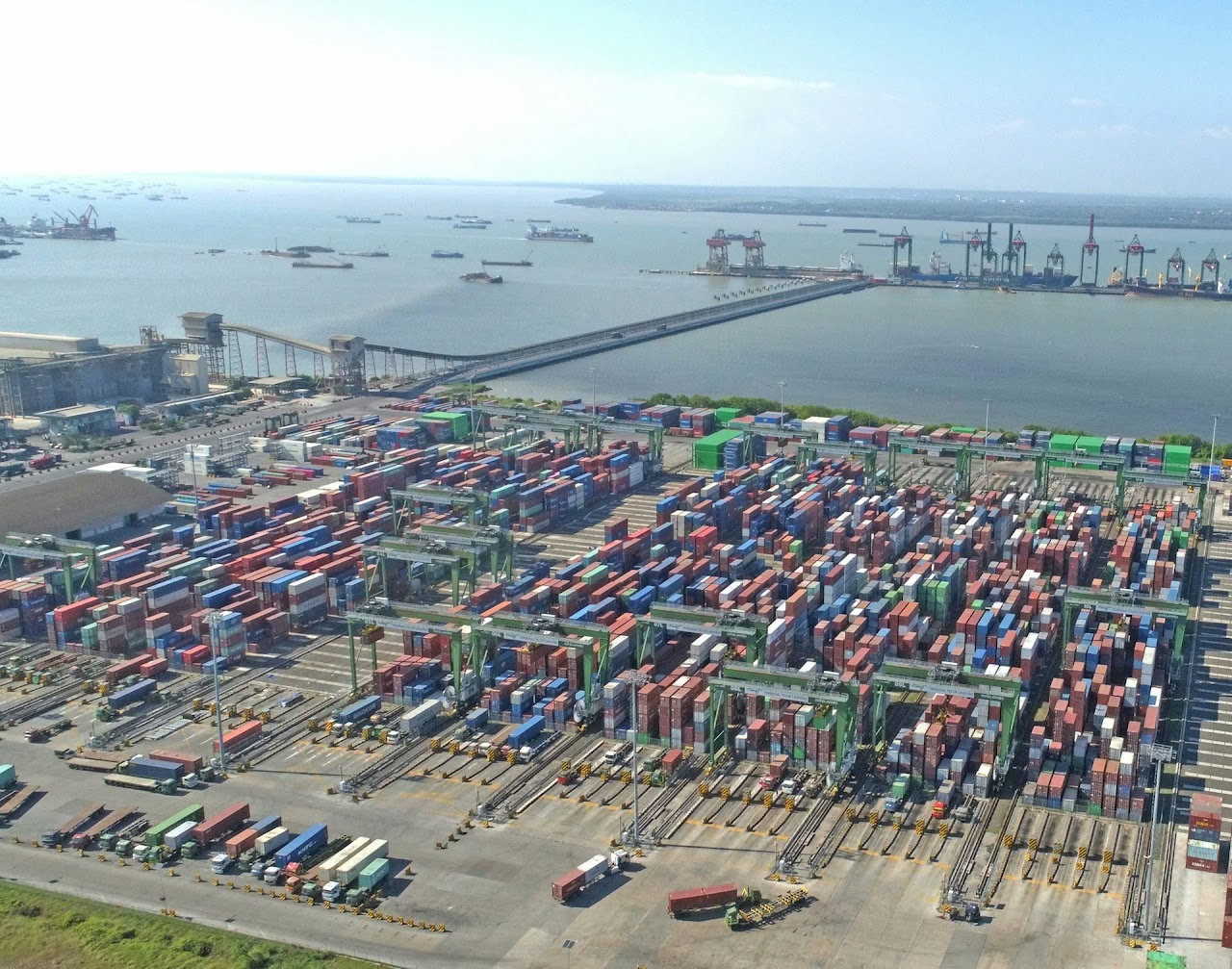
Japan HS Code Classification — Determine the Right Tariff Code for Your Imports
Why the Wrong HS Code Costs More Than Just the Duty Rate
Last Updated: April 2026 · Reading Time: ~11 min
Why This Matters
The problem: Japan Customs processes tens of millions of import declarations each year through NACCS, the national automated customs system. Every HS heading is validated against a live tariff database at the moment of filing. An abolished heading triggers instant rejection. A misclassified heading triggers post-clearance audit exposure that reaches back up to five years.
The stakes beyond duty rates: A wrong HS code can activate FEFTA (外為法) pre-import clearance requirements, Radio Act (電波法) certification triggers, and in controlled-goods cases, criminal penalties. The duty rate is the smallest of your problems.
How the HS System Works
The Harmonized System (HS) is an international nomenclature maintained by the World Customs Organization (WCO). Japan adopted HS 2022 effective January 1, 2022 — the current operative version. All WCO members share the same six-digit structure; Japan adds a four-digit national subdivision.
HS Code Structure
| Level | Digits | Example | Meaning |
|---|---|---|---|
| Chapter | 2 | 85 | Electrical machinery and equipment |
| Heading | 4 | 8507 | Electric storage batteries |
| Subheading | 6 | 8507.60 | Lithium-ion batteries |
| Japan tariff line | 10 | 8507.60.0000 | Japan national subdivision |
The General Rules for Interpretation (GRI)
Classification is not guesswork. Japan Customs applies the WCO's six-rule framework in strict order. GRI 1 must be applied first — jumping to GRI 3 because a product has multiple components is the most common classification error.
| Rule | Principle | When It Applies |
|---|---|---|
| GRI 1 | Classify by chapter and section notes, then heading text | Always — applied first |
| GRI 2(a) | Incomplete or unassembled goods treated as complete | Goods shipped unassembled or knocked down |
| GRI 2(b) | Mixtures and combinations: consider each applicable heading | Multi-material goods |
| GRI 3 | Most specific description; then essential character; then last heading in numerical order | When two or more headings appear equally applicable |
| GRI 4 | Classify under goods most similar in character or use | No applicable heading found via GRI 1–3 |
| GRI 5 | Containers and packing materials | When classifying packaging separately |
| GRI 6 | Subheading selection within the same heading | Applied after heading is determined via GRI 1–5 |
⚠️ Critical discipline: Work through GRI 1 in full before proceeding. If the heading text and section/chapter notes cover your product, classification ends at GRI 1. Most misclassifications arise from skipping directly to GRI 3 without completing GRI 1.
HS 2022: What Changed and Why It Still Trips Up Importers
HS 2022 introduced structural changes that make pre-2022 classification references dangerous for certain categories. The most significant changes affect electronics.
Abolished and Restructured Headings — High Risk
| Old Heading | Status in HS 2022 | Correct Action |
|---|---|---|
| 8525.xx | ❌ Abolished entirely | Reclassify by function: transmission apparatus → check 8525.50–8525.89; cameras → 8525.80 |
| 8541.40 | Restructured | Solar PV cells and modules → 8541.43 (effective Japan Jan 2022) |
| 8507.60 | Active | Rechargeable lithium-ion batteries (unchanged) |
| 8506.50 | Active | Non-rechargeable (primary) lithium batteries (unchanged) |
🚨 NACCS Rejection Rule: NACCS validates every HS heading at the moment of declaration filing. Any abolished or restructured heading that no longer exists in Japan's current tariff schedule triggers an immediate system rejection — your shipment will not proceed to physical inspection. It is held at the declaration stage.
Battery Classification: The Most Commonly Misclassified Category
Battery chemistry determines the HS code. This is not interchangeable.
| Battery Chemistry | HS Code | DG Classification |
|---|---|---|
| Rechargeable lithium-ion | 8507.60 | UN 3480 (bulk) / UN 3481 (in equipment) |
| Non-rechargeable (primary) lithium | 8506.50 | UN 3090 (bulk) / UN 3091 (in equipment) |
| Alkaline MnO₂ | 8506.10 | Not DG |
| Nickel-cadmium (rechargeable) | 8507.30 | Not DG (standard) |
⚠️ Do not use 8506.30 for standard alkaline batteries. That heading covers mercuric oxide batteries, which are a restricted substance in Japan. This error triggers a fundamentally different regulatory response.
Common Misclassification Patterns
The following patterns appear repeatedly in Japan Customs post-clearance audits. Each triggers reassessment plus back-duty exposure:
| Product | Common Error | Correct HS |
|---|---|---|
| Standard data / LAN cables | 8544.60 (cables for voltages >1,000V) | 8544.42 (≤80V connectors) |
| Industrial floor scales | 8423.10 (personal/bathroom weighing scales) | 8423.82 |
| Cordless electric hand tools | 8467.19 (pneumatic tools only) | 8467.29 |
| Solder wire and rods | 8515.xx (soldering/brazing equipment) | 8311.30 |
| Solar PV cells and modules | 8541.40 (abolished heading) | 8541.43 |
| All semiconductor mfg components | 8486.90 bulk assignment | Classify individually by function |
The Drone and UAS Decision Tree
Unmanned aircraft systems are among the highest-frequency misclassification cases in Japan. The decision turns entirely on whether you are importing a complete system or a component:
 What are you importing?
          │
     ┌────┴─────────────────────────────┐
     │                                  │
 Complete balloon/dirigible         Unmanned aircraft (drone)?
          │                                  │
          ▼                                  ▼
       8801.00                           8806.xx
                                             │
                         ┌───────────────────┘
                         │
                  Part of aircraft/balloon system?
                         │
                         ▼
                      8807.90
                         │
         ┌───────────────┴──────────────────────┐
         │                                      │
  Standalone radio/telecom device?    Contains controlled technology?
         │                                      │
         ▼                                      ▼
   Chapter 85 (8517.xx)                FEFTA review required
                                       regardless of HS heading
The FEFTA Consistency Rule
This is one of the most consequential rules in Japan classification practice, and one of the least understood by foreign importers.
The rule: All documents filed simultaneously with Japan Customs (import declaration via NACCS) and METI (FEFTA clearance application under 外為法第52条) must reflect the same HS heading. A discrepancy between the heading in your customs declaration and the heading cited in your FEFTA filing creates direct exposure under 外為法 Article 52.
| Scenario | NACCS Filing | METI FEFTA Filing | Result |
|---|---|---|---|
| ✅ Consistent | 8807.90 | 8807.90 | No exposure |
| ❌ Discrepancy | 8807.90 | 8806.21 | Art. 52 exposure |
⚠️ If you revise your HS classification between the time you submit your FEFTA application and the time you file your customs declaration, you must update both filings to match. Never declare a heading different from the one METI reviewed in your clearance application.
FEFTA and HS: The Dual-Track Assessment
Technology imports require running classification and trade control in parallel, not sequentially.
 Determine HS code
          │
          ▼
 Does the HS heading map to a       ──Yes──→ FEFTA List Control check
 METI controlled category?                    (輸出貿易管理令)
          │
          │ No
          ▼
 Does the product have dual-use     ──Yes──→ FEFTA Catch-All assessment
 characteristics regardless of               (外為法第52条 推知規定)
 its HS code?
          │
          │ No
          ▼
 Standard import declaration
 (no FEFTA clearance required)
⚠️ Critical: FEFTA catch-all assessment is triggered by the product's technical specifications and known or reasonably inferred end-use — not by its HS heading alone. A product classified under an entirely civilian heading (e.g., 8471 for computers) can still require FEFTA pre-import clearance if its technical characteristics meet dual-use control criteria.
Advance Rulings — Binding Classification from Japan Customs
When classification is genuinely uncertain, Japan Customs offers a formal advance ruling system under 関税法第7条の15 (Customs Act Article 7-15). A ruling is binding: it applies to all future imports of identical goods through any Japan port of entry.
When to Seek an Advance Ruling
| Scenario | Recommended Approach |
|---|---|
| Novel product with no clearly applicable heading | Formal ruling before first shipment |
| Goods assessed for FEFTA and customs simultaneously | Ruling locks in consistent heading for both filings |
| High-volume recurring imports | Ruling eliminates per-shipment classification risk |
| Pricing or duty estimates will be relied upon by client | Ruling or informal consultation at minimum |
| Physical product samples can be provided | Formal ruling (preferred) |
| Physical samples cannot be provided | Informal telephone verification with Japan Customs classification officers (not binding, reduces risk) |
Advance Ruling Process Timeline
| Step | Action | Timeframe |
|---|---|---|
| 1 | Prepare: technical specifications, photographs, functional description, proposed HS heading, GRI analysis | 1–2 weeks |
| 2 | Submit application to competent Regional Customs (管轄税関) | Day 1 |
| 3 | Japan Customs reviews; may request supplemental information or physical samples | 2–6 weeks |
| 4 | Binding ruling issued | 30–90 days total |
📌 Batch size guidance: Japan Customs may request splitting large batches. In practice, submissions of five or fewer items per application have the smoothest processing. For large BOMs, phased submission is typically preferable to a single large batch.
Informal Consultation
Japan Customs classification officers are accessible for pre-filing telephone consultations. These are not binding (cannot be cited in a declaration), but they are substantially faster than formal rulings and reduce the risk of an incorrect filing. Useful for goods with moderate classification uncertainty where a formal ruling is disproportionate.
Post-Clearance Audit Exposure
Japan Customs conducts routine post-clearance audits (事後調査) that cover up to five years of import history. Classification errors discovered in audit trigger:
| Consequence | Detail |
|---|---|
| Additional duties | Full reassessment at correct rate, retroactive to original import date |
| Delay surcharge (延滞税) | Accrues from original clearance date on underpaid duty |
| Penalties | Applied for negligent or intentional misclassification |
| Enhanced scrutiny | Importer flagged for elevated risk at all future ports of entry |
The five-year lookback means a single systematic misclassification across recurring shipments creates compounding exposure. Addressing a known error proactively (through voluntary disclosure) results in significantly lower penalties than an audit-triggered reassessment.
HS Classification: Pre-Shipment Checklist
- Identify product by function and composition, not just commercial name
- Apply GRI 1 first — read section and chapter notes before proceeding
- Check for abolished or restructured headings (especially 8525.xx, 8541.40)
- For batteries: confirm chemistry from manufacturer data sheet before assigning HS
- For technology and industrial goods: run FEFTA dual-use assessment alongside classification
- Verify FEFTA consistency: NACCS heading and METI filing heading must match
- For uncertain goods: apply for advance ruling before first shipment
- Verify against Japan Customs current tariff schedule, not WCO HS alone
- Maintain classification documentation for a minimum of five years
Official References
| Source | Link |
|---|---|
| Japan Customs — Tariff Schedule | customs.go.jp/tariff |
| Customs Act (EN) — Advance Ruling Art. 7-15 | japaneselawtranslation.go.jp |
| WCO — Harmonized System 2022 | wcoomd.org |
| NACCS — Japan Customs Clearance System | naccscenter.com |
| METI — Export and Import Control | meti.go.jp/english |
| Japan Customs — Tariff Classification Inquiry | customs.go.jp/english |
This article is for informational purposes only and does not constitute legal or customs advice. Consult a certified customs specialist (通関士) or licensed attorney (弁護士) for your specific classification and regulatory assessment needs.