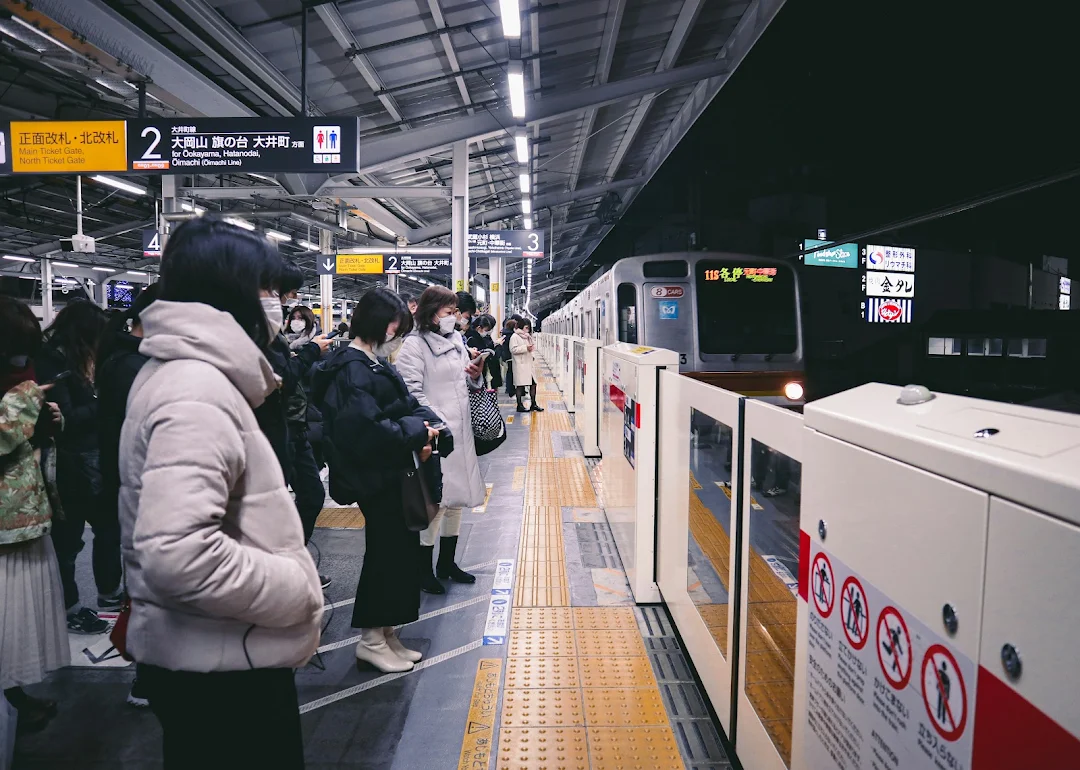
Japan holds one of the deepest concentrations of games industry talent in the world. Pixel artists, 3D character modelers, engine programmers, QA engineers, and experienced producers are available in Osaka, Tokyo, and Fukuoka at competitive rates relative to comparable talent in North America or Western Europe. For a foreign studio without a Japan legal entity, accessing that talent is not merely an HR question. It is a regulatory and employment-law question. This post sets out what employer-of-record (EOR) can and cannot do for game studios, and where the structural limits require careful contract design or an escalation to a full Japan entity.
Why Japan Is a Priority Talent Market for Game Studios#
Japan's games industry runs on craft specialization. The domestic development culture has produced distinct schools of sprite work, sound design, and game direction that remain highly sought by studios worldwide. Beyond creative talent, Japan's geography matters commercially. Publishers such as Nintendo, Sony Interactive Entertainment, Bandai Namco, Capcom, and Sega are headquartered or maintain major operations here. Studios that ship titles intended for the Japanese market, or that co-develop with Japanese publishers, benefit from having local staff who can manage localization, QA against Japanese retail standards, and publisher-facing production relationships.
Foreign studios typically approach Japan hiring in one of two ways: contracting independent freelancers (which carries its own misclassification risk under Japanese labor law) or hiring as a statutory employer. The latter requires either a Japan entity or an EOR arrangement.
The Entity Problem: Why You Cannot Simply Hire#
Under Japanese law, employing an individual who works in Japan requires the employer to be registered with the relevant social insurance (社会保険) and labor insurance (労働保険) systems. Enrollment is mandatory, not optional. A foreign company with no Japan legal presence has no mechanism to enroll. It cannot withhold income tax through the Japan payroll system, cannot remit employer contributions to the Japan pension and health insurance schemes, and cannot satisfy the obligations imposed by the Labor Standards Act (労働基準法) and its implementing regulations.
The practical consequence is that a foreign studio that wishes to hire a Tokyo-based developer on a direct employment contract, without a Japan entity, has no compliant path to do so unilaterally. The studio's options are: establish a Japan entity, use an EOR provider, or structure the relationship as genuine independent contracting. Each option has distinct trade-offs.
What EOR Provides#
Under an EOR arrangement, a Japan-registered employer (Aplash or its licensed partner employer) becomes the statutory employer for Japanese payroll and compliance purposes. The foreign studio directs the individual's day-to-day work and retains practical management control over deliverables, tools, and project assignments. The EOR provider handles the following statutory obligations:
(a) Drafting and executing compliant employment contracts under Japanese law.
(b) Enrollment in social insurance (社会保険), covering health insurance (健康保険) and welfare pension (厚生年金保険), and in labor insurance (労働保険), which covers workers' compensation insurance (労働者災害補償保険, commonly called 労災) and unemployment insurance (雇用保険).
(c) Monthly payroll processing, income tax withholding at source, and year-end adjustment (年末調整).
(d) Compliance with the Labor Standards Act (労働基準法) on working hours, rest periods, overtime calculation, paid leave, and dismissal procedures.
(e) Maintaining the employment register and notices required by relevant prefectural labor bureaus and the Japan Pension Service (日本年金機構).
The studio pays the EOR provider a monthly fee covering gross payroll, employer-side statutory contributions, and the provider's margin. The commercial relationship between the studio and the EOR provider is governed by a service agreement; the employment relationship is formally between the EOR provider and the individual.
IP Assignment: The Critical Issue for Game Studios#
This is the structural risk that creative and technology companies most frequently underestimate when entering an EOR arrangement.
Under Japanese employment law, intellectual property created by an employee in the ordinary course of their employment belongs to the employer by default, provided the employment agreement contains a clear IP assignment clause and the creation falls within the scope of employment. The operative statutory framework derives from the Copyright Act (著作権法) and related provisions governing works made for hire.
The problem for game studios using EOR is that the statutory employer is the EOR provider, not the studio. The studio directs the work; the EOR provider employs the worker. Without a properly structured agreement that transfers IP rights from the EOR provider to the studio, the ownership chain is broken. The individual's creative output vests in the EOR provider by operation of law and employment contract, and the studio has no automatic right to that output.
The solution is a correctly drafted IP assignment and work-for-hire agreement as part of the EOR commercial structure. This agreement must do several things simultaneously:
(a) The EOR provider's employment contract with the individual must contain a valid, broadly scoped IP assignment clause covering all works created in the course of employment.
(b) The EOR service agreement between the EOR provider and the studio must include an assignment or exclusive license of all such IP rights to the studio on creation, or at minimum at each payroll cycle.
(c) The scope of employment must be defined with sufficient specificity so that a court applying Japanese law would conclude that the individual's game development work falls within it.
Studios that enter EOR arrangements using off-the-shelf provider contracts without reviewing IP assignment mechanics are taking a material risk with their production assets. For a game studio, this is not an abstract concern: the character designs, source code, audio assets, and level geometry created by EOR employees are the product. A defective ownership chain discovered at the time of a publisher deal or a financing round is expensive to remediate. Engage qualified Japanese legal counsel to review the IP chain before the first EOR employee is onboarded.
Non-Compete Limitations: What Japan Will and Will Not Enforce#
Foreign studios working on unannounced titles, unreleased IP, or proprietary engine technology often request broad non-compete agreements for their Japan-based employees. Japanese courts will not enforce sweeping restrictions.
The standard applied by Japanese courts is a proportionality test examining: (a) whether the employer has a legitimate business interest to protect, (b) whether the employee's role gave them access to information that justifies restriction, (c) whether the geographic scope is reasonable, (d) whether the duration is reasonable, and (e) whether the employee receives compensation in return for accepting the restriction. Courts routinely void non-competes that fail to satisfy these criteria, particularly those with indefinite or multi-year durations, national or global geographic scope, or that cover activities unrelated to the employee's actual role.
For game studios, the practical guidance is:
(a) Non-disclosure agreements covering pre-release game titles, engine IP, and trade secrets are generally enforceable in Japan when properly drafted. This is the primary tool for protecting sensitive projects.
(b) Non-compete restrictions, to have any reasonable prospect of enforcement, should be narrow in role scope (covering only activities the employee actually performed), limited in geography (generally Japan only, or a specific region), and short in duration (six months to one year post-employment is more defensible than two years or more). Compensation to the restricted employee during the non-compete period materially strengthens enforceability.
(c) No post-employment restriction should be drafted without review by Japanese employment counsel. The EOR provider's standard contract template will not contain studio-specific non-compete language; it must be negotiated as a bespoke addendum.
Visa Considerations for Foreign Talent#
EOR can only employ individuals who are already legally resident in Japan with the right to work. It does not create a visa sponsorship mechanism.
If the studio intends to hire Japanese nationals who already reside and work in Japan, EOR is generally straightforward from a visa perspective. No additional visa work is required; the individual's status is that of a Japanese citizen working for a Japan-registered employer.
If the studio intends to relocate a non-Japanese employee to Japan, the situation is different. The relevant visa category for most game studio roles is the Engineer / Specialist in Humanities / International Services status (技術・人文知識・国際業務), which covers software engineers, artists, and producers with tertiary qualifications in relevant fields. This visa category requires a sponsor employer, and the sponsor must be a Japan-registered entity with appropriate corporate standing.
An EOR provider can serve as the visa sponsor in limited circumstances, but this is not a standard feature of most EOR arrangements. Many EOR providers do not offer visa sponsorship for new arrivals because the immigration bureau (出入国在留管理局) scrutinizes the substance of the employment relationship, and a recently signed EOR arrangement for a single foreign employee relocating to Japan may not present convincingly as the kind of established employer-employee relationship the bureau expects. Studios that need to relocate non-Japanese talent to Japan should treat this as a signal that entity setup is the appropriate path, not EOR.
Japan Labor Protections That Surprise Foreign Studios#
Studios accustomed to at-will employment regimes in North America or the United Kingdom encounter several Japan-specific rules that require adjustment.
Dismissal restrictions. The Labor Standards Act (労働基準法) and accumulated case law create a doctrine of dismissal (解雇) abuse. A dismissal that lacks objectively reasonable grounds and is not socially accepted as appropriate is void under Japanese courts' consistent interpretation, regardless of what the employment contract says. This applies to EOR employees through the EOR provider's statutory obligations. Studios directing the work of EOR employees should not assume that ending the EOR service agreement automatically and cleanly terminates the individual's employment.
Paid leave accrual. All employees are entitled to statutory annual paid leave (年次有給休暇). The entitlement accrues from the date of employment and increases with tenure. Under rules in force since 2019, employers are required to ensure employees take a minimum number of paid leave days per year. Failure to comply creates liability at the EOR provider level, but the studio as the practical operator of the individual's work schedule bears day-to-day responsibility for managing leave scheduling.
Industrial accident insurance. Enrollment in workers' compensation insurance (労災) is mandatory from the first day of employment. This is not a benefit the studio can opt out of through the EOR structure; the EOR provider is the statutory enrollee and bears the reporting obligation in the event of a workplace accident or occupational illness, even when the individual works remotely or at a studio-designated facility.
Severance expectations. Japan has no statutory mandatory lump-sum severance payment equivalent to many other jurisdictions, but employment practice has developed strong norms around severance offers upon involuntary termination. In practice, employees who are dismissed or whose roles are eliminated expect severance pay reflecting tenure, and studios that direct EOR providers to terminate employees without severance provision are likely to encounter disputes. This expectation is culturally embedded and reinforced by the practical difficulty of dismissal litigation, which makes negotiated separation the dominant resolution mechanism.
EOR Fees and Total Employer Cost#
EOR is a market-entry instrument, not an ongoing operational structure at scale. The total employer cost under an EOR arrangement includes gross salary, employer-side social insurance contributions (roughly 15 to 16 percent of gross salary under current Japanese rates, covering the employer's share of welfare pension, health insurance, labor insurance, and related contributions), and the EOR provider's service fee, which is typically structured as a percentage margin on top of total employer cost or as a fixed monthly fee per employee.
For a single senior programmer or art director at a gross annual salary of eight to ten million yen, the total employer cost including EOR margin is material. A studio should model this as the cost of controlled, compliant market access during a pilot phase, not as the baseline cost structure it intends to carry indefinitely as headcount grows.
At three to five Japan employees, the fixed overhead of maintaining a Japan KK (株式会社) begins to be favorable relative to the cumulative EOR margin. At ten or more employees, the comparison is unambiguous.
EOR to Entity Transition#
When a studio graduates from EOR to its own Japan KK, the transition requires attention to the employment relationships already in place.
Employees employed through the EOR provider are legally employed by that provider. They are not automatically transferred to the studio's new KK. Under Japanese employment law, a change of employer requires the employee's affirmative consent. The practical transition path is:
(a) The EOR provider gives the employee contractually and statutorily required notice of termination of the EOR employment relationship.
(b) The studio's new KK simultaneously offers the employee a new employment contract on equivalent or superior terms.
(c) The employee accepts the new contract, and continuity of service for purposes of paid leave accrual, severance expectation, and other tenure-based entitlements is preserved by agreement (this requires explicit drafting; it is not automatic).
Studios should negotiate EOR exit provisions at the time of onboarding, not at the point of transition. EOR providers vary in how they handle transition facilitation; some include it as a standard service and others treat it as a separately priced milestone. The IP assignment chain described above should also be reviewed at the point of transition to ensure rights held in the EOR structure transfer cleanly to the new entity.
The KK incorporation process, including Articles of Incorporation (定款) drafting and bank account setup, typically takes four to six weeks from initial engagement under normal conditions. Studios planning a transition should factor this timeline into their hiring and production planning.
When EOR Is Not the Right Answer#
EOR is well-suited for: a studio's first one to three Japan hires, situations where the studio is validating whether Japan operations make commercial sense before committing to entity costs, and cases where the required talent is Japan-resident and the studio has no immediate need to relocate foreign staff.
EOR is not the right answer when: the studio needs to relocate non-Japanese talent to Japan on a new visa, the studio anticipates more than five to eight Japan employees within twelve months, the studio requires a Japan entity for publisher contracts or regulatory approvals, or the studio's IP assignment requirements are sufficiently complex that the EOR contractual chain cannot be structured to satisfy them within a reasonable timeframe.
In those cases, the appropriate path is a direct KK incorporation, possibly in parallel with a short-term EOR arrangement covering the period between first hire and entity readiness.
This article is informational only and does not constitute legal or employment advice. Regulatory requirements and employment law in Japan are subject to change. Consult a qualified advisor before acting on the content. Last updated: June 2026.