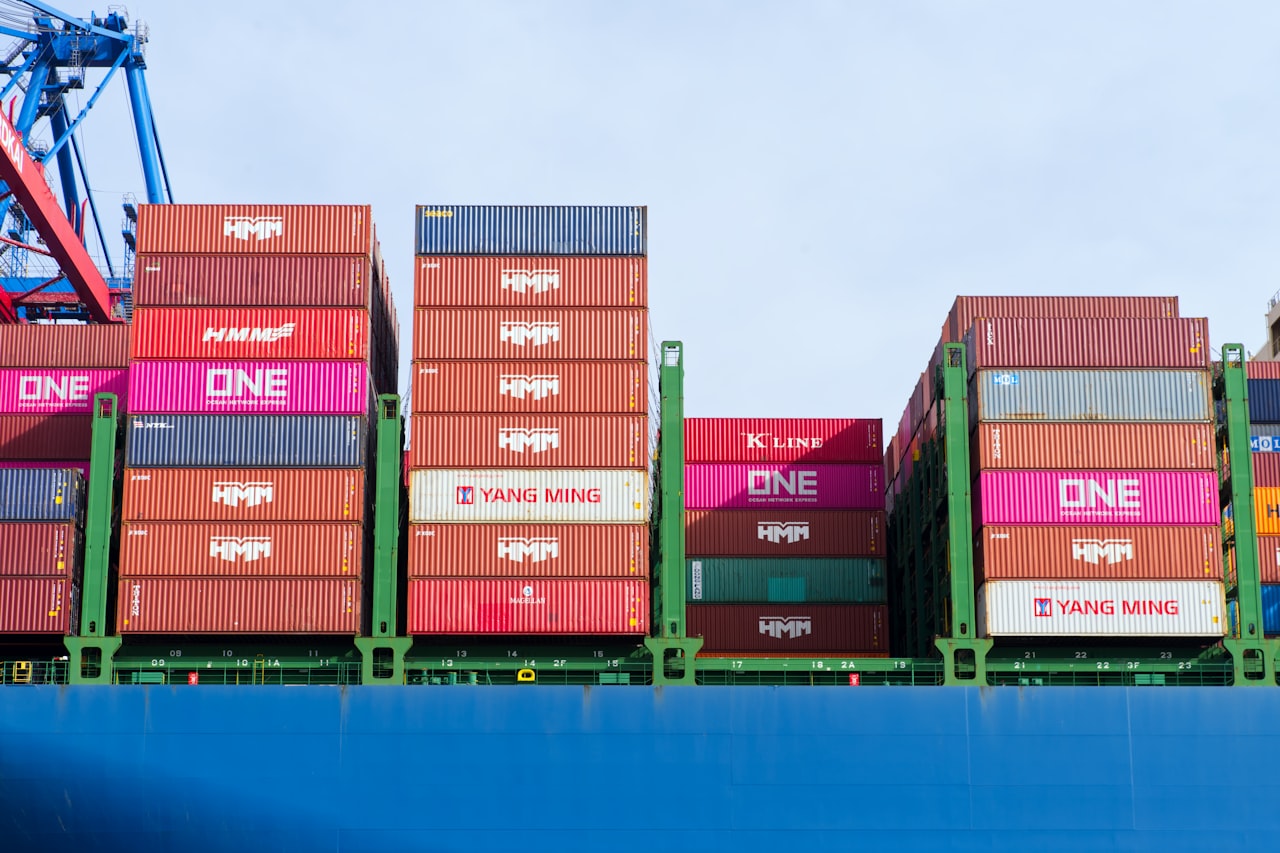
Importing from the United States to Japan carries a compliance profile that differs from every other major trade corridor. Two features make it distinctive. First, the Japan-US Trade Agreement is a selective, partial instrument, not a comprehensive free trade agreement, so many US-origin goods still clear at MFN rates rather than at a preferential duty. Second, US-origin goods do not leave US jurisdiction at the port of export: the Export Administration Regulations (EAR), administered by the US Bureau of Industry and Security (BIS), extend across borders and can impose obligations on the Japan importer for any onward transfer, re-export, or technology sharing. The result is a dual compliance structure where Japan-side customs and import licensing requirements operate in parallel with US-side re-export obligations. This article maps both tracks, identifies where they interact, and sets out the practical documentation and screening steps for the 2026 filing environment.
Scope note: Aplash advises on Japan-side regulatory strategy. Analysis of US export control obligations under EAR, OFAC sanctions, or ITAR is outside Aplash's scope and must be referred to qualified US counsel.
1. The Japan-US Trade Agreement: What It Covers and What It Does Not#
1.1 Structure and Coverage
The Japan-US Trade Agreement (日米貿易協定) entered into force on 1 January 2020. It is a selective, goods-only agreement, not a comprehensive free trade agreement (FTA). It does not replicate the scope of JEEPA (the Japan-EU EPA), CPTPP, or RCEP. The agreement covers two discrete areas:
(a) Selected industrial goods. A specific subset of industrial tariff lines, principally in certain machinery, automotive parts, and chemical headings. Coverage is not uniform across any chapter. At each tariff line, the importer must verify whether the heading is included and at what rate schedule.
(b) Agricultural tariff-rate quotas (TRQs). Beef, pork, dairy products, wine and other alcoholic beverages, wheat, barley, and selected processed food items are subject to TRQ schedules. A reduced in-quota tariff applies up to the allocated volume; the over-quota MFN rate applies beyond it. TRQ administration for agricultural goods sits with MAFF (農林水産省, Ministry of Agriculture, Forestry and Fisheries), with separate allocation procedures.
The critical implication: the Japan-US Trade Agreement is not an assumption of coverage. For each shipment, the importer must check the specific tariff line against the agreement's annexes. Many headings across HS Chapters 84, 85, 87, and others still clear at MFN. Treating the agreement as a comprehensive FTA is one of the most common planning errors on this corridor.
1.2 Comparison With Other EPA Partners
For context: JEEPA provides broad industrial and agricultural coverage across thousands of tariff lines. CPTPP covers eleven parties, with Japan offering comprehensive schedules on industrial goods and phased schedules on agricultural items. RCEP broadens that further to include China, Korea, and ASEAN members. The Japan-US Trade Agreement sits outside all of these. The US is not a CPTPP member, is not party to RCEP, and the bilateral agreement does not approach JEEPA in breadth.
For US exporters: a goods-specific tariff line check is mandatory before claiming preferential treatment. This is not optional administrative housekeeping; it determines the applicable rate and, therefore, the landed cost model.
1.3 Origin Certification
For industrial goods covered by the Japan-US Trade Agreement, Japan operates an importer self-certification model. There is no requirement for a government-issued certificate of origin from the US side. The Japan importer self-certifies origin on the import declaration, and must be able to substantiate the claim with origin documentation on request: commercial invoice, manufacturer's declaration, or equivalent evidence demonstrating that the goods qualify as originating in the United States under the agreement's rules of origin.
For agricultural TRQ claims, the procedure is different. Allocation rights are administered through MAFF, and importers must hold a TRQ allocation certificate before claiming the in-quota rate. The certificate is obtained prior to shipment, not at the declaration stage.
2. Tariff Coverage by Product Category#
The table below is a purely informational reference. Duty rates are MFN or preferential estimates only; the Tariff Law (関税定率法) and Japan Customs tariff schedule are the authoritative sources for each specific heading. Verify every line against the current published schedule before declaring.
| Category | Representative HS Headings | Japan-US TA Coverage | Indicative MFN Rate | Additional Compliance Layer |
|---|---|---|---|---|
| Automotive parts | 8708 (selected) | Selective; check line | 0-3.9% | Type Approval (MLIT) |
| Industrial machinery | 8402-8486 (most) | Selective; many at 0% MFN | 0-3.9% | PSE if electrical |
| Electrical apparatus | 8501-8548 | Selective | 0% (most) | PSE, FEFTA dual-use risk |
| Aircraft and parts | 8801-8807 | Not covered; MFN typically 0% | 0% | FEFTA dual-use review |
| Pharmaceuticals | 3004 | Not covered | 0% | PMD Act registration mandatory |
| Wine and spirits | 2204-2208 | Selective TRQ / rate schedule | 15-182 yen/litre | Food sanitation notification |
| Beef | 0201-0202 | TRQ in-quota rate | 38.5% (over-quota) | MAFF TRQ allocation |
| Pork | 0203 | TRQ / gate price system | Variable | MAFF TRQ allocation |
| Dairy | 0401-0406 | Selective TRQ | Variable | MAFF allocation |
| Semiconductors | 8541-8542 | Not covered; typically 0% MFN | 0% | FEFTA dual-use review mandatory |
| Chemical substances | Chapter 28-29 | Selected headings | Variable | CSCL (化審法) screening |
Rates above are indicative only. The authoritative source is the Japan Customs tariff schedule published under 関税定率法. Do not rely on this table for import declaration purposes. FEFTA dual-use classification under 外為法 must be assessed independently of the tariff rate.
3. The Dual Compliance Problem: Japan Customs and US EAR Re-Export Rules#
3.1 What the EAR Re-Export Framework Is
The US Export Administration Regulations (15 CFR Parts 730-774), administered by BIS, regulate the export, re-export, and transfer of items subject to US jurisdiction. "Subject to the EAR" includes US-origin goods, US-origin technology and software, and foreign-made items that contain controlled US-origin content above specified thresholds.
The concept of re-export is broad. Under EAR, re-export includes:
(a) Shipping US-origin goods from Japan to a third country.
(b) Releasing US-origin technology to a foreign national (non-US person) inside Japan (this is a "deemed re-export" under EAR).
(c) Providing US-origin software to non-US persons in a manner that constitutes a transfer of controlled technology.
The de minimis rule applies to foreign-made goods: if a product manufactured outside the US incorporates US-controlled content above a specified threshold (generally 10% for most countries; 25% for a limited group of destinations with lower sensitivity), that product may itself become subject to EAR. Japan is not in the 10% threshold group for most items, but the rule is product-specific and must be assessed against the relevant Export Control Classification Number (ECCN).
3.2 What This Means for the Japan Importer
Receiving US-origin goods at a Japan port does not by itself create an EAR compliance obligation. However, the following actions by the Japan importer do engage EAR:
(a) Re-exporting those goods to a third country.
(b) Transferring US-origin technology or source code to non-US nationals working for the importer or its customers (including at a Japanese subsidiary of a non-US parent).
(c) Selling or otherwise transferring the goods to a restricted party or for a prohibited end use.
(d) Re-exporting to a country subject to a US country-specific embargo or to a designated restricted end-user on the BIS Entity List, Denied Persons List, or Unverified List.
The practical consequence for Japan importers of US-origin goods: any onward movement or technology disclosure plan must be reviewed against EAR obligations before the transaction closes. This is not a Japan regulatory matter; it requires US counsel. Aplash can help identify which transactions have a cross-border onward transfer dimension requiring that referral.
3.3 Dual Compliance Overview
The table below maps the two parallel tracks. This is a structural comparison only, not a compliance determination.
| Compliance dimension | Japan track | US EAR track |
|---|---|---|
| Legal basis | 外為法; 輸出貿易管理令 | Export Administration Regulations (15 CFR Parts 730-774) |
| Governing authority | METI (経済産業省) | BIS (Bureau of Industry and Security) |
| Trigger for import | FEFTA Art. 52 / Annex 1 items on import | Not triggered by importation alone |
| Trigger for re-export | 外為法 Art. 48; 輸出貿易管理令 Annex 1 (別表第1) | Re-export of EAR-subject items; deemed re-export |
| Classification system | Japan security export control list | Commerce Control List (ECCN) |
| Coordination | Wassenaar-coordinated but not identical | Wassenaar-coordinated but not identical |
| Mutual substitution | Japanese licence does NOT satisfy EAR; EAR licence does NOT satisfy FEFTA | Same: no mutual substitution |
The absence of mutual substitution is the most operationally significant point. A US BIS export licence, if required, does not waive any Japan FEFTA obligation. Conversely, a Japan METI approval does not satisfy EAR re-export requirements. Both tracks must be managed independently.
4. ECCN Does Not Equal Japan Classification#
A common and costly assumption on the US-to-Japan corridor: if a good is classified EAR99 (uncontrolled under US export law), it must be similarly unrestricted under Japan's framework. This is incorrect.
The US ECCN system and Japan's security export control classification are both grounded in Wassenaar Arrangement parameters, but they are implemented by different authorities under different domestic legal frameworks. The same good can be EAR99 and nonetheless fall within Japan's Export Trade Control Order Annex 1 (輸出貿易管理令別表第1) if the item's technical specifications meet a Japan-listed control parameter.
Japan hi-hi hantei, controlled/uncontrolled determination (該非判定) must be conducted independently of any ECCN assignment. The 該非判定 is a Japan-domestic analysis under 外為法 and is not satisfied by EAR self-classification or BIS commodity jurisdiction determination. See blog 81 (Japan Export Control Determination and ECCN Guide) for 該非判定 mechanics and the catch-all (推知規定) analysis.
Additionally, the catch-all 規制 (推知規定) under Japan's framework can capture goods not on the Annex 1 list when the Japan exporter knows, or should know, that the goods are intended for a weapons program, proliferation-relevant end-use, or sanctioned destination. EAR99 classification does not eliminate the 推知規定 risk if such end-use indicators are present.
5. Sanctions and Entity Screening#
Two parallel sanctions frameworks apply to US-to-Japan trade.
5.1 US OFAC Sanctions
OFAC (Office of Foreign Assets Control) administers US sanctions programs. OFAC jurisdiction reaches US persons globally, US-origin goods, and transactions processed through US correspondent banking. For a Japan importer receiving US-origin goods:
(a) If the Japan importer involves a US person (US citizen, permanent resident, US-incorporated entity, or any person physically in the US) anywhere in the transaction chain, OFAC sanctions apply to that person's conduct.
(b) Payment routed through a US correspondent bank may be scrutinized against OFAC sanctions lists regardless of whether the Japan importer itself is a US person.
(c) If the US-origin goods will be onward-transferred to a jurisdiction under a US comprehensive embargo, OFAC may apply independent of EAR.
OFAC analysis requires US counsel. Aplash can identify the structural features of a transaction that create OFAC exposure as a basis for that referral.
5.2 Japan METI and MOF Sanctions Under 外為法
Japan administers its own sanctions framework under 外為法. Designated countries (Russia, North Korea, Iran, and others subject to UN Security Council resolutions or Japan bilateral measures) are subject to import and export restrictions administered by METI and MOF. The 外為法 framework covers:
(a) Asset freezes against designated persons and entities.
(b) Payment prohibitions for specified transactions.
(c) Export and import restrictions for designated destinations.
For US-origin goods destined for Japan end-use (no onward transfer), Japan sanctions are typically not triggered. Where goods are transited, re-exported, or technology is transferred onward, the Japan framework applies independently from any US clearance.
5.3 Banking Screening in 2026
A practically significant development: the April 2024 amendment introducing enhanced AML and sanctions screening obligations for financial institutions operating under 外為法 means that Japanese and international banks processing trade finance for US-to-Japan transactions involving any sanctions-adjacent dimension (country, end-user, product type) may request additional documentation. This is not a new legal requirement on the importer directly, but the importer bears the operational consequence when a bank places a hold on a wire or letter of credit pending documentation.
Practical preparation: for shipments involving dual-use goods, transactions with counterparties in sectors adjacent to controlled end-uses, or routing through non-standard banking channels, prepare a documentation package that includes origin documentation, end-user confirmation, and, where available, ECCN self-classification documentation from the US exporter. This documentation may be requested by the Japan importer's bank before releasing payment.
6. Regulatory Mapping for Common US Export Categories#
6.1 Automotive Parts (HS 8708)
The Japan-US Trade Agreement provides selective coverage on HS 8708 sub-headings. Some sub-headings carry a preferential rate; others remain at MFN. MFN for most automotive parts ranges from 0% to 3.9% under 関税定率法, so the financial uplift of the preferential rate varies. Vehicle safety standards compliance (型式認証, type approval, administered by MLIT) applies regardless of tariff treatment and is origin-neutral.
6.2 Industrial Machinery (HS Chapters 84 and 85)
Many headings in Chapters 84 and 85 carry 0% MFN duty in Japan, which limits the practical impact of the Japan-US Trade Agreement for straightforward machinery imports. The agreement provides selective rate reductions on headings where a positive MFN rate exists. For electrical equipment, PSE (電気用品安全法, Electrical Appliance and Material Safety Act) certification requirements apply independently of origin and of tariff treatment. See blog 18 (PSE Certification for Foreign Manufacturers) for the Notifying Supplier pathway available to non-resident manufacturers. For high-specification industrial electronics, semiconductor manufacturing equipment, or computing hardware, FEFTA dual-use review under 外為法 is mandatory before assuming MFN clearance is the only compliance dimension.
6.3 Aircraft and Parts (HS 8801-8807)
MFN duty on aircraft and parts is generally 0%. The Japan-US Trade Agreement adds limited practical tariff benefit here. The significant compliance dimension is FEFTA: aircraft systems, certain avionics, navigation, and propulsion components have dual-use characteristics under Japan's controlled items framework. FEFTA applicability screening is required before any clearance commitment. See blog 81 for FEFTA classification mechanics. For US-origin aerospace goods, the US ITAR (International Traffic in Arms Regulations, separate from EAR and administered by the US State Department) may also apply; ITAR-controlled items require mandatory escalation to Director review at Aplash before any transactional engagement.
6.4 Pharmaceuticals and Medical Devices (HS Chapter 30)
Japan MFN duty on pharmaceuticals is generally 0%. The Japan-US Trade Agreement does not materially change the duty picture for most pharma items. The governing compliance requirement is PMD Act (薬機法, Pharmaceuticals and Medical Devices Act) registration, which is origin-neutral. Foreign manufacturers must hold a marketing authorization (製造販売承認, seizo hanbai shonin) or a listing through a licensed marketing authorization holder in Japan. This applies regardless of whether goods originate from the US, EU, or any other jurisdiction. See blog 21 (Importing Medical Devices to Japan) for registration pathways.
6.5 Wine and Spirits (HS 2204-2208)
The Japan-US Trade Agreement includes rate reductions on wine and certain spirits. For wine, the agreement reduced or eliminated the per-litre duty on wine imports from the US. Food sanitation notification under the Food Sanitation Act (食品衛生法) is required for all food and beverage imports, and the responsible importer must file notification through the competent Regional Quarantine Station. For spirits, the alcoholic beverages tax (酒税法) applies at importation and is calculated on quantity and alcohol content. Labeling requirements under the Japan Agricultural Standards (JAS) framework may apply to wine.
6.6 Beef and Pork (HS 0201-0203)
The Japan-US Trade Agreement TRQ schedules for beef and pork are among the most commercially significant features of the agreement. In-quota rates are substantially below the over-quota MFN rate for beef (38.5%). TRQ allocations are administered by MAFF; importers must secure an allocation certificate prior to shipment. Food sanitation inspection and a quarantine clearance process are required at the port of entry. Beef imports from the US are also subject to beef-cattle traceability documentation requirements administered under the Japan Beef Traceability Law.
6.7 Semiconductors and High-Technology Products (HS 8541-8542)
Japan's MFN duty on semiconductors is typically 0%. The critical compliance dimension is FEFTA. Many semiconductor products, particularly high-performance logic chips, AI accelerators, and advanced memory, fall within or near Japan's controlled items schedules under 外為法 and 輸出貿易管理令. FEFTA dual-use applicability screening is required. As noted in Section 4, EAR99 status does not determine Japan 該非判定 outcome. ECCN and Japan classification must be assessed independently. For AI/ML accelerator products, METI guidance on the Wassenaar implementation has evolved; the controlling criterion is technical performance parameter, not the device's intended commercial application. See blog 81 for 該非判定 mechanics.
For US-origin semiconductor manufacturing equipment: the 輸出貿易管理令 半導体製造装置 amendments (effective 23 July 2023) added 23 categories of semiconductor manufacturing equipment to Japan's controlled items list. US-origin equipment in those categories cleared for export by BIS under EAR may nonetheless require separate METI engagement if the Japan importer intends to re-export or if the equipment has dual-use characteristics under Japan's revised schedules. This is a Tier H matter requiring Director review at Aplash before quoting.
7. NACCS Declaration Mechanics for US-Origin Goods#
All commercial imports to Japan are declared through NACCS (Nippon Automated Cargo and Port Consolidated System) under Customs Act (関税法). For US-origin goods, the declaration includes the following elements specific to this corridor:
(a) Origin country code. "US" is declared as the country of origin. If goods are transshipped through a third country (e.g., routed via a Pacific hub), the origin remains US provided the goods have not been substantially transformed in the transshipment country. Transshipment routing that involves processing or mixing risks a challenge to the declared origin.
(b) Preferential rate code (if applicable). If the tariff line is covered by the Japan-US Trade Agreement and the importer is claiming the preferential rate, the applicable EPA/TA rate code must be entered in NACCS and the importer self-certification must be available on request. The declaration must be consistent: the same HS heading that supports the rate preference must align with any FEFTA or other regulatory filings.
(c) MFN rate (if the heading is not covered). For headings not covered by the Japan-US Trade Agreement, MFN rate applies. There is no default preference; the importer must affirmatively verify whether the heading is covered.
(d) FEFTA consistency. Per the FEFTA Consistency Rule, the HS heading declared in NACCS must match any simultaneously filed METI documents. A discrepancy between the customs declaration HS code and a FEFTA filing creates 外為法 exposure. This applies equally on the US-to-Japan corridor as on any other.
(e) JCT. Consumption tax (消費税, JCT) at 10% (or 8% for qualifying food and non-alcoholic beverages, excluding alcohol) is levied on dutiable value plus duty at importation under the consumption tax framework. JCT paid at importation is recoverable by qualified invoice issuers. For non-resident importers using IOR or ACP structures, see blog 22 (IOR vs ACP for Japan Imports) for how JCT recovery is structured in each model.
8. Documentation Package for US-to-Japan Imports#
The following is the standard documentation set for a commercial US-to-Japan import. Product-specific regimes add to this base set.
(a) Commercial invoice. Must show the declared transaction value, US origin (country of origin), and description sufficient to support HS classification under 関税定率法. If claiming Japan-US Trade Agreement preference, the invoice should contain or be accompanied by the importer's self-certification of origin.
(b) Packing list. Itemized by package and by line item.
(c) Bill of lading or airway bill. Consignee and notify party details must be consistent with the import declaration and, where IOR or ACP structures are used, with those arrangements.
(d) Importer self-certification (Japan-US TA claims). A written declaration by the importer affirming that the goods qualify as US-originating under the Japan-US Trade Agreement's rules of origin, with supporting documentation available on request. Japan Customs can request substantiation; the importer must be able to produce manufacturer origin documentation.
(e) TRQ allocation certificate (agricultural TRQ imports). Obtained from MAFF prior to shipment. Required to access in-quota rates on beef, pork, dairy, wine, and other TRQ-scheduled agricultural products.
(f) Product-specific compliance certificates. PSE Declaration of Conformity (if electrical goods), 技適 certification (if wireless devices), PMD Act marketing authorization (if medical), food sanitation notification (if food/beverage). These are origin-neutral; the same documentation requirements apply regardless of whether goods come from the US or any other market.
(g) US export documentation (for importer retention). The US exporter's Electronic Export Information (EEI) filing, Automated Export System (AES) confirmation, and any BIS export licence (if applicable on the US side) are US-side documents. The Japan importer is not required to file these with Japan Customs. However, the Japan importer should retain copies, because: (i) a BIS export licence, if one was required, may specify end-use conditions or re-export restrictions that bind the Japan importer; (ii) the documentation may be requested in a FEFTA compliance audit; (iii) it substantiates origin and ECCN status for 該非判定 purposes.
(h) OFAC and entity screening records. For transactions involving dual-use goods, higher-risk counterparties, or banking through US correspondent institutions, a contemporaneous record of OFAC and BIS Entity List screening should be maintained. This is not a Japan Customs requirement, but it supports the bank documentation requests described in Section 5.3 and demonstrates due diligence in any subsequent audit.
(i) Importer structure evidence. For non-resident importers, the ACP appointment letter (税関事務管理人 appointment under Customs Act Art. 95 (関税法第95条)) or, where Aplash is acting as IOR, the Aplash purchase and resale documentation. See blog 22 for the structural distinction between these two models.
9. Common Pitfalls on the US-to-Japan Corridor#
9.1 Assuming the Japan-US Trade Agreement Is a Comprehensive FTA
The agreement is not a comprehensive FTA. For any given tariff line, the importer must check the Japan-US Trade Agreement annex, not assume coverage. Many headings in sectors where US exports are strong, including industrial electronics, medical technology, and consumer goods, are not covered. The cost impact of applying MFN where a preference was anticipated can be significant, particularly where MFN rates are material (agriculture, certain chemicals, some consumer goods).
9.2 Treating EAR99 as Japan-Uncontrolled
EAR99 is a US export control classification confirming that a good is not controlled under the Commerce Control List for US export purposes. It says nothing about Japan's classification under 外為法 and 輸出貿易管理令. A product that is EAR99 may still require FEFTA import or export screening in Japan. 該非判定 must be conducted independently.
9.3 Missing the Re-Export Compliance Layer
Many Japan importers of US-origin goods plan only for the Japan importation step. If the goods will be re-exported from Japan, used as inputs in goods subsequently re-exported, or if US-origin technology will be shared with non-US nationals (including employees or customers), the EAR re-export framework may apply. The time to assess this is before the purchase order, not after the goods have cleared customs.
9.4 OFAC Screening Gaps in Trade Finance
Cross-border payments from a US exporter receiving USD wires, or a Japan importer paying through a bank with US correspondent relationships, may be subject to OFAC screening at the banking layer. Where the goods are dual-use, the counterparty is in a sector adjacent to sanctioned activities, or the banking routing involves US institutions, the Japan importer should anticipate that additional trade finance documentation may be requested and prepare that documentation at order stage.
9.5 Transshipment Routing and Origin
US-origin goods routed through a Pacific transshipment hub (for example, a Pacific port with consolidation) remain US-origin for customs purposes provided no substantial transformation occurs. However, a transshipment route that involves physical consolidation, repackaging in a third country, or mixing with goods of other origin may create an origin challenge. Japan Customs has discretion to investigate declared origin under 関税法; the importer must hold origin documentation that supports the declared origin regardless of routing.
9.6 ITAR: The Separate US Defence Controls Framework
Separate from EAR, the US International Traffic in Arms Regulations (ITAR), administered by the US State Department, controls defense articles and defense services. ITAR-controlled goods are entirely outside the EAR framework and carry substantially stricter controls, including on the Japan importer and any onward transfer or use. If there is any indication that US-origin goods may be ITAR-controlled, this requires immediate referral to US counsel and mandatory escalation at Aplash before any transactional engagement. This is a hard stop, not a standard screening step.
9.7 Banking Documentation Timing
The enhanced AML and sanctions screening obligations now active in Japan's banking framework mean that documentation gaps identified by a bank during payment processing create timeline risk at a point when goods may already be in transit or at the port. Preparing the full documentation package, including origin certification, end-user confirmation, and ECCN self-classification from the US exporter, before the purchase order is placed reduces the risk of a payment hold delaying customs clearance.
10. Importer Structure for US-to-Japan Shipments#
Non-resident importers (US companies without a Japan entity, Japan address, or Japan residence) face the same structural constraint on this corridor as on any other: Japan Customs requires a Japan-resident importer of record or a Japan-resident customs attorney appointment under Customs Act (関税法).
Two structures are available:
IOR (Importer of Record). Aplash acts as the legal importer. Aplash purchases the goods from the US exporter, clears customs in Aplash's name, and re-sells to the Japan buyer. Aplash is named on the import declaration and issues a qualified invoice (適格請求書) enabling JCT input credit recovery for the Japan buyer.
ACP (Attorney for Customs Procedures / 税関事務管理人). The foreign company is the legal importer named on the import declaration, as permitted under Customs Act Art. 95 (関税法第95条) for non-resident importers. Aplash, as a Japan resident, acts as the procedural agent before Japan Customs. The foreign importer recovers consumption tax directly by separately appointing a JCT tax representative (消費税の納税管理人) and registering as a Qualified Invoice Issuer.
These are structurally distinct legal frameworks and are never interchangeable. See blog 22 (IOR vs ACP for Japan Imports: Which Structure Do You Need in 2026?) for the full determination framework.
11. Cross-References#
The following Aplash resources provide detail on dimensions of the Japan regulatory framework referenced in this post:
- EPA preference mechanics: Blog 82 (Japan EPA/FTA Preference Utilization) covers the origin certification, self-certification procedures, and NACCS rate-code selection applicable across all EPA partner corridors, including the Japan-US Trade Agreement.
- Duty calculation framework: Blog 24 (Japan Import Duty Guide 2026) covers how customs value is assessed under 関税定率法, how duty is calculated on that basis, and the de minimis threshold.
- Japan export control and 該非判定: Blog 81 (Japan Export Control Determination and ECCN Guide) covers FEFTA 該非判定 mechanics, the catch-all (推知規定) analysis, and how Japan's classification system relates to the Wassenaar parameters underlying EAR. This is the essential cross-reference for the dual compliance analysis in Sections 3-4 of this post.
- FEFTA import clearance: Blog 20 (Japan FEFTA Import Clearance) covers the import licensing framework under 外為法第52条 for goods on Japan's controlled items list.
- Importer structure (IOR vs ACP): Blog 22.
- PSE certification: Blog 18 covers the Notifying Supplier model for foreign manufacturers of electrical goods.
- Medical device registration: Blog 21 covers PMD Act registration pathways for medical devices and in-vitro diagnostics.
- China-to-Japan corridor: Blog 23 (How to Import from China to Japan) covers the RCEP preference framework and origin-specific compliance dimensions on that corridor.
- EU-to-Japan corridor: Blog 84 (How to Import from the EU to Japan) covers the JEEPA framework and the JEEPA vs MFN rate selection methodology.
Conclusion#
Importing from the United States to Japan in 2026 requires two distinct compliance tracks to be managed simultaneously. The Japan-US Trade Agreement provides partial, not universal, tariff relief; the starting point for every shipment is a line-by-line tariff verification, not an assumption of preference. At the same time, US-origin goods carry the EAR re-export framework across the Pacific, creating obligations on the Japan importer for any onward transfer or technology disclosure that must be assessed and documented before the transaction is concluded, not after customs clearance. Japan's own FEFTA framework operates independently of EAR; the two regimes do not substitute for each other, and ECCN classification does not determine Japan 該非判定 outcome. Where sanctions, dual-use goods, or defense-adjacent transactions are involved, both the US and Japan tracks require qualified specialist input, with US law matters referred to US counsel.
This article is informational only and does not constitute legal, tax, or regulatory advice. Consult a qualified advisor before acting on the content. Last updated: 2026-05.